Laminate & LVT Fitting Cost per m² (2026)
Updated October 2026 · 6 min read
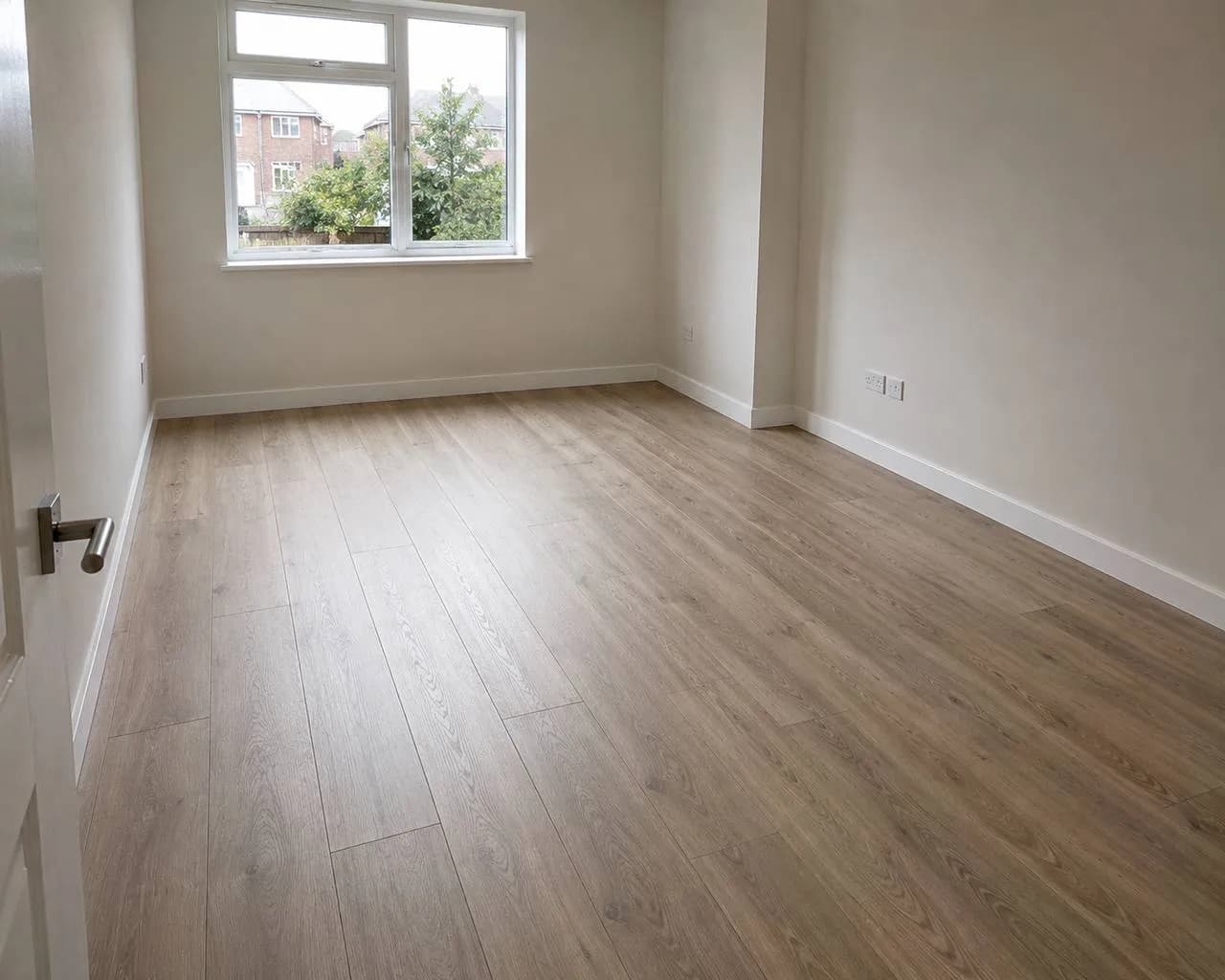
Flooring is one of the few renovation jobs that is almost always priced per square metre for labour. But the per-m² figure you are quoted rarely covers everything — and the items it excludes (subfloor preparation, old floor removal, underlay, threshold strips) can add meaningfully to the final cost. Understanding what the rate includes, and what to ask before accepting a quote, saves both money and surprises.
This guide covers labour-only fitting costs for laminate, LVT, and engineered wood flooring in 2026. It explains what affects the per-m² rate, why small rooms carry a minimum charge, and what to check before comparing quotes.
Flooring fitting costs per m² (2026)
The figures below cover labour only — not the cost of the flooring material itself, underlay, or subfloor preparation. London rates sit at the upper end of these ranges due to higher labour costs and logistics.
| Flooring type | Labour cost per m² | Notes |
|---|---|---|
| Laminate (click-lock) | £5 – £10 per m² | London at upper end |
| LVT click | £6 – £12 per m² | London at upper end |
| Engineered wood | £10 – £18 per m² | Glue-down or nail-down adds time |
| Minimum charge | Half a day | Applies to small rooms |
Rates are labour only and exclude flooring material, underlay, subfloor preparation, and threshold strips. London rates are typically at the upper end of these ranges. Prices are typical market ranges, not quotes.
What the per-m² rate does and does not cover
The per-m² rate for flooring fitting covers the labour of laying the flooring — cutting, fitting, and securing the boards in the specified pattern. In most cases, it does not cover the flooring material itself (sold separately), underlay, subfloor preparation, removal and disposal of the existing floor, or threshold strips at doorways.
Subfloor preparation is the item most commonly excluded and most commonly underestimated. A concrete subfloor that needs a 3mm levelling compound across a 30m² open-plan area is a separate cost that can add meaningfully to the total. An uneven suspended timber floor that needs boards screwed down and any rot replaced is another. Always ask whether subfloor prep is included in the quote or priced as an extra after the survey.
When comparing flooring quotes, ask each fitter to confirm explicitly: is subfloor preparation included? Is old floor removal and disposal included? Is underlay included? Without these answers, you are comparing different scopes, not different prices.
What affects the per-m² fitting rate
1. Lay pattern
A standard straight grid layout (boards running parallel to the longest wall) is the fastest and therefore cheapest pattern. A herringbone layout — where each board is laid at 45° or 90° to its neighbour in a V-pattern — requires significantly more cuts, more time spent aligning the pattern, and higher material wastage. A diagonal layout similarly increases cutting time and waste. Budget typically 30–50% more labour time in labour time for herringbone over a straight lay.
2. Room shape and cut complexity
A simple rectangular room is the fastest to floor. Bay windows, chimney breast recesses, curved walls, and doorway thresholds all require additional cuts and fitting time. An L-shaped room takes longer than its area suggests; an open-plan kitchen-diner with an island is more complex still. If your room has multiple projections, expect this to be reflected in the quote.
3. Installation method
Floating click-lock installation — where boards lock together without adhesive or fixings and float over an underlay — is the fastest method for both laminate and most LVT products. Glue-down LVT (used in kitchens and commercial spaces for stability) takes longer and requires careful adhesive work. Engineered wood fitted by nail-down or glue-down method takes longer than floating because of the fixing process and the curing time required before foot traffic can resume.
4. Subfloor condition
A smooth, flat, dry subfloor in good condition is the ideal starting point. Most real London projects involve some degree of preparation — a small amount of levelling compound at a transition, boards that need screwing down on a suspended timber floor, or a damp-proof membrane on a ground-floor concrete slab. These preparation steps are usually priced per job rather than per m², and the cost varies with what the survey finds.
5. London logistics
Delivering flooring materials to a third-floor flat without a lift, parking restrictions in central London, and waste disposal for old carpet or boards all add to the overall project cost even when they do not appear in the per-m² rate. A fitter pricing a London job accurately will factor these in upfront rather than presenting them as day-of extras.
How to keep flooring fitting costs down
- Choose a straight or staggered grid pattern over herringbone. The laying pattern is the single biggest variable in fitting time for the same area. If the look of herringbone is important to you, budget for the additional labour cost — it is significant.
- Combine adjacent rooms in one booking. Minimum half-day charges apply regardless of area. Doing a hallway and landing, or a bedroom and dressing room, in one visit means the minimum charge is spread across more square metres, reducing the effective per-m² cost.
- Source the flooring yourself through a trade account. Flooring manufacturers and distributors offer trade pricing that is meaningfully cheaper than retail. Ask your fitter if they can source through their account, or use an account yourself if you have one. The material saving on a 40m² floor can be significant.
- Address subfloor problems before the flooring fitter arrives. Subfloor repairs — screeding, board replacement, DPM installation — that are done as part of the flooring visit are charged at flooring fitter rates. Getting a specialist in to prepare the subfloor separately, before the flooring day, can reduce the overall cost.
- Measure accurately before requesting quotes. Give fitters the correct square metreage. If you under-measure and additional material needs ordering, it may arrive too late for the booked day, causing a delay. Measure twice, add 10% for waste and cuts, and confirm the figure at the survey.
Frequently asked questions
Is LVT or laminate cheaper to fit?
The labour cost per m² is similar for both, typically £5–£12/m² depending on room complexity and location. LVT click is marginally denser and heavier, adding slight handling time on larger areas. Engineered wood costs more to fit because adhesive or nail-down installation methods are more labour-intensive than floating click systems. The bigger cost difference between these products is usually in the material itself, not the fitting rate.
Does the per-m² rate cover everything?
Usually not. The per-m² labour rate typically covers laying the flooring only. Confirm whether subfloor preparation (levelling compound, DPM, board repairs), removal and disposal of the existing floor, underlay, and threshold strips are included in the rate or priced separately. Getting like-for-like quotes requires asking about all of these items explicitly — not just the m² rate.
Why do small rooms cost more per m²?
Most flooring fitters charge a minimum of half a day regardless of area. For a 6m² hallway, you are paying for two to three hours of a tradesperson's time whether the room fills that time or not. The minimum charge spreads across fewer square metres, which raises the effective per-m² cost significantly. Combining small adjoining spaces — a hallway and landing, for example — into one booking can reduce this considerably.
How long does flooring fitting take?
A single room of 15–20m² typically takes a full working day including preparation. Whole-house projects are planned across multiple days, with subfloor assessment on the first day to identify any levelling or preparation work needed before laying starts. Herringbone or diagonal patterns significantly increase fitting time compared to a standard straight grid — budget typically 30–50% more labour time time for a herringbone layout.
Do I need to remove the existing floor before new flooring is fitted?
Laminate and LVT click products can sometimes be installed over an existing smooth, flat hard floor if it is level and in good condition. A fitter should assess this at the survey — fitting over an uneven surface will cause problems. Old carpet always needs removing before a hard floor is laid. Tile adhesive residue and high points need grinding flat before a floating floor can be installed without rocking or clicking.
Core Build Group · London
Flooring from £10 per m², minimum half a day.
Fixed price after a free survey. Subfloor assessment included.
View our flooring service →Sources: Fantastic Services cost guides 2026; Trade2Base pricing guides 2026. All prices shown are typical market ranges, not quotes. Actual costs depend on flooring type, room complexity, subfloor condition, and location within London. Always obtain a written fixed-price quote after a site survey.